On a busy project, a fitting is more than a small part of the pipework. It must match the system’s pressure, temperature, fluid, and installation conditions. A low purchase price can look attractive, but leaks, corrosion, or difficult repairs may cost more over time. Details matter.
Pressed steel fittings can suit many standard applications when their ratings and manufacturing quality meet project requirements. Premium fittings may offer tighter dimensional control, stronger material documentation, or better resistance to demanding service conditions. These benefits are not automatic. Buyers should check product data, applicable standards, material certificates, connection dimensions, and inspection records rather than rely on labels alone.
So, why do international contractors specify premium fittings over pressed steel? Often, the decision reflects risk management across complex projects, where components must fit consistently and perform reliably across different sites and suppliers. A precise thread, clean weld preparation, and traceable material grade can make installation and quality checks easier. Still, premium does not mean suitable for every system. Not always. The right choice depends on verified specifications, operating conditions, maintenance plans, and the cost of failure. Even experienced teams can overlook a detail, such as compatibility with an existing pipe or coating. This guide examines how to compare fitting types, assess evidence from manufacturers, and select components with sound technical and commercial reasoning.
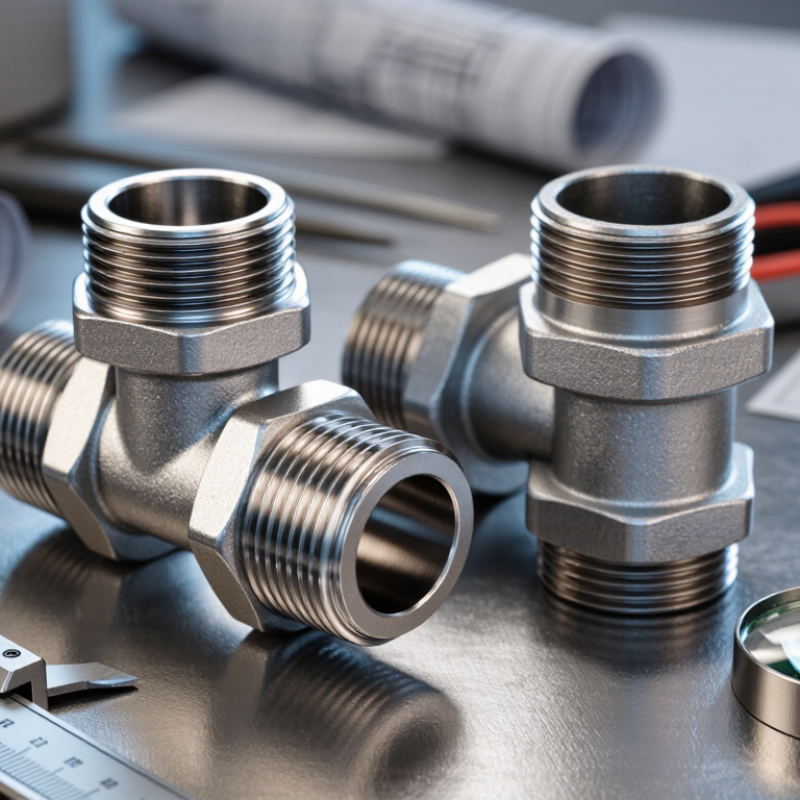
Define Premium Fittings Through ASTM A105’s 485 MPa Tensile Requirement
How to Choose Premium Fittings Over Pressed Steel?
Premium fittings begin with verifiable material performance, not a polished surface. ASTM A105/A105M-23 requires a minimum tensile strength of 485 MPa for forged carbon-steel pressure fittings. The same specification sets minimum yield strength at 250 MPa, with defined elongation and reduction-of-area requirements. These values indicate how the fitting may respond under pressure and forming loads.
ASME BPVC Section II, Part A recognizes SA-105 for forged pressure components. ASTM A370 provides the mechanical-test methods used to confirm tensile results. A proper material test certificate should show the heat number, chemistry, test values, and standard edition. Traceability matters. Without it, 485 MPa is only a claim.
Pressed steel can serve lower-risk applications, but its suitability depends on thickness, forming quality, weld details, and inspection records. Forged fittings usually offer more consistent grain flow and machining allowances. Still, the word “forged” does not replace engineering verification. Check dimensions against ASME B16.11, review pressure ratings, and inspect threads or socket surfaces under good lighting. I would not approve a fitting from tensile strength alone. Impact toughness, corrosion allowance, temperature, and manufacturing defects can change the decision. That is the uncomfortable part. A strong test result may still hide a weak selection.
Compare Pressure Ratings Using ASME B16.5 Class 300 Performance Data
How to Choose Premium Fittings Over Pressed Steel?
ASME B16.5 Class 300 is a pressure class, not a universal 300 psi limit. Its allowable pressure changes with material group and operating temperature. At room temperature, many carbon steel flange materials support substantially higher pressure than the class number suggests. However, that rating can drop sharply as temperature rises. Always read the pressure-temperature table for the actual material.
Premium forged fittings usually provide more consistent wall thickness, cleaner grain flow, and better resistance to local stress. These details matter around threads, sockets, and pressure transitions. During installation, inspect the bore, sealing face, and machining marks. A rough flange face can damage a gasket before the system reaches operating pressure. Small defects become expensive surprises.
Pressed steel may suit low-demand service, but its performance depends heavily on forming quality, coating, and dimensional control. Do not compare products by pressure class alone. Check the applicable material specification, wall thickness, temperature limit, and test records. Hydrostatic testing can reveal leakage, but it cannot prove long-term fatigue resistance. That distinction is often missed.
Field experience also exposes an uncomfortable point: a fitting may meet a listed rating while the assembled joint remains weak. Misalignment, uneven bolt tightening, or thermal cycling can reduce real performance. Engineers should verify the complete piping assembly, not only one component. That extra review takes time, yet skipping it creates a risk that the data sheet cannot show.
How to Choose Premium Fittings Over Pressed Steel? — Compare Pressure Ratings Using ASME B16.5 Class 300 Performance Data
Rating note: The 740 psi (51.0 bar) value is the ASME B16.5 Class 300 pressure-temperature rating at up to 100°F for Material Group 1.1. Confirm the applicable edition, material group, temperature, component scope, and product documentation for the actual design. ASME B16.5 flange ratings should not be treated as a generic pressure rating for all fittings.
Check Dimensions and Wall Thickness Against ASME B16.9 Requirements
Choosing premium fittings over pressed steel should begin with measurable evidence, not surface appearance. ASME B16.9 covers factory-made wrought butt-welding fittings, including dimensions and permitted tolerances. It does not replace the material specification or the project design code. That distinction matters.
Check the nominal pipe size, outside diameter, center-to-end dimension, and bevel geometry. Measure the wall thickness at several points, especially around elbows and reducers. A calibrated ultrasonic gauge can reveal thinning that a caliper misses. Compare the readings with the applicable ASME B16.9 dimensional table, marked schedule, and purchase specification. Do not accept one measurement as proof. I once trusted a single caliper reading too much.
Alignment also deserves attention. Place the fitting on a flat inspection surface and check whether the ends sit evenly. Poor alignment can create welding gaps and extra correction work. Review heat numbers, material certificates, and inspection records before installation. A premium fitting should show consistent geometry, controlled thickness, and traceable production data. Pressed steel may appear acceptable, yet forming can create uneven wall distribution near tight curves. Look closely there. If dimensions fall outside the stated tolerances, request clarification before welding, even when the fitting looks clean.
Evaluate Corrosion Resistance Through ASTM A106 and ISO 9227 Test Data
How to Choose Premium Fittings Over Pressed Steel?
Corrosion resistance should begin with verifiable material records, not polished appearance. ASTM A106 specifies seamless carbon steel pipe requirements, including chemistry, tensile strength, and yield strength. It does not prove that a fitting will resist every corrosive environment. That distinction matters.
In field inspections, I compare heat numbers, mill certificates, wall thickness, and surface condition before selecting fittings. Premium fittings usually offer tighter dimensional control and fewer weak points around bends or welded areas. Pressed steel may perform adequately in dry indoor systems, but thin sections can lose protection quickly after scratches or coating damage. Small defects matter.
ISO 9227 salt spray testing helps compare coating or material performance under controlled sodium chloride exposure. Look for test duration, method type, specimen preparation, and corrosion ratings. Neutral salt spray is useful, but it does not recreate soil, humidity cycles, chemicals, or flowing water. Laboratory evidence has limits. A fitting passing 1,000 hours is not automatically suitable for coastal service. Use the result as comparative evidence, then match it with operating temperature, chloride concentration, pressure, and maintenance access. My own evaluations have sometimes favored a less expensive option after better exposure data appeared. That is worth admitting. Reliable choices leave room for doubt, inspection, and replacement planning.
How to Choose Premium Fittings Over Pressed Steel?
Evaluating Corrosion Resistance Through ASTM A106 and ISO 9227 Test Data
ISO 9227 test method
Neutral salt spray uses a 5% sodium chloride solution at 35°C. Acidified and copper-accelerated methods use more aggressive conditions.
ASTM A106 specification
ASTM A106 defines seamless carbon-steel pipe chemistry and mechanical requirements; it does not assign a universal salt-spray life.
Selection guidance
Compare fittings using the same ISO 9227 exposure method, exposure duration, coating condition, and corrosion-rating criteria.
Reference basis: ISO 9227 nominal conditions for NSS, AASS, and CASS testing. ASTM A106 is a material specification rather than a corrosion-performance ranking system. Salt-spray hours should not be compared across different test methods without equivalent conditions.
Select Fittings by Lifecycle Cost, Leakage Risk, and 10-Year Maintenance Data
Choosing premium fittings over pressed steel should begin with lifecycle cost, not purchase price.
The U.S. Department of Energy’s Improving Compressed Air System Performance sourcebook reports that leakage can waste 20–30% of compressor output. A loose joint can become an invisible energy bill.
Track every fitting for ten years. Record installation labor, retightening, leak tests, corrosion findings, replacement hours, and production downtime. NIST Handbook 135 recommends including these future costs in lifecycle calculations, with appropriate discounting. A premium fitting may reduce failures through tighter tolerances, stronger threads, and more stable sealing materials. That advantage matters most in vibration, moisture, or temperature-changing environments.
Pressed steel is not automatically a poor choice.
It may perform well in dry, accessible systems with controlled installation. Still, its lower price can hide inspection costs. Ask for verified pressure ratings, material certificates, and independent test results, such as leakage performance evaluated under ISO 15848 principles. Field experience also matters. One poorly prepared thread can defeat an expensive fitting.
The data may disappoint.
A ten-year spreadsheet is more reliable than a polished quotation. Compare total cost per installed joint, then review actual maintenance records annually. If the system has no inspection history, state that uncertainty clearly. That honesty is part of a sound engineering decision.
FAQS
Check heat numbers, material certificates, wall thickness, dimensions, and surface condition. Appearance alone proves little.
No. It confirms material and strength requirements, but not performance in every corrosive environment.
They may work in dry, accessible indoor systems with careful installation. Scratches can expose thin sections quickly.
It compares coating or material behavior under controlled salt exposure. It does not recreate every field condition.
No. Coastal service also involves humidity, chlorides, temperature changes, and maintenance limitations.
Consider operating temperature, chloride concentration, pressure, vibration, moisture, and inspection access. Small details can change the decision.
Include purchase price, installation labor, leak testing, retightening, replacements, downtime, and corrosion inspections.
Loose joints may leak energy. Repeated inspections and production stoppages can exceed the original savings.
Request pressure ratings, material records, dimensional data, leakage results, and independent test evidence. Field records matter too.
Not always. Better exposure data may support a cheaper choice, though uncertainty should be recorded honestly.
Conclusion
Premium fittings should be evaluated through measurable engineering criteria rather than appearance or initial price. A practical benchmark is ASTM A105, which specifies a tensile strength requirement of 485 MPa for suitable forged carbon steel components. Pressure performance should then be compared using ASME B16.5 Class 300 data, while dimensions, tolerances, and wall thickness must be checked against ASME B16.9 requirements. These standards help confirm that the fitting can withstand installation loads, operating pressure, and long-term service conditions.
Corrosion resistance also deserves careful review. Material compatibility with ASTM A106 piping, supported by relevant ISO 9227 salt spray test data, can indicate how well the system may perform in aggressive environments. The final decision should consider lifecycle cost, leakage risk, inspection requirements, and 10-year maintenance data rather than purchase price alone. This explains why do international contractors specify premium fittings over pressed steel: consistent strength, tighter dimensional control, lower failure risk, and more predictable long-term operating costs can provide greater value across the entire piping system.
 ABP Scaffolding
