ABP Scaffolding ABP Scaffolding

German vs American Rigid Scaffolding Clips How to Choose?

Time:2026-10-15 Author:Amelia
0%

Choosing between German and American rigid scaffolding clips requires more than comparing photographs or prices. The distinction is not always clean. Manufacturers may use regional names differently, while tube diameters can appear nearly identical. This is why buyers should ask how to distinguish between german and american style rigid scaffolding clips before ordering. Check the clip’s standard, tested load capacity, tube compatibility, bolt size, material grade, and corrosion protection. A shiny finish proves little.

European scaffold couplers commonly follow EN 74-1 requirements, which address dimensions, slip resistance, strength, and testing. German projects may also reference DIN-based scaffold practices and 48.3 mm tube systems. In the United States, users typically evaluate products against OSHA requirements under 29 CFR 1926 Subpart L, alongside manufacturer test documentation. OSHA reports that scaffold-related incidents cause approximately 4,500 injuries and 50 fatalities annually. Small hardware decisions can therefore affect a complete working platform.

The practical difference often appears in jaw geometry, casting or pressing methods, bolt configuration, and connection tolerances. American-style rigid clips may be designed around common 1.9-inch tube systems, while German-style products may follow metric engineering conventions. The outside diameter can match closely, but compatibility still requires verification. Do not rely on appearance alone. Ask for independent test reports, traceable batch information, and installation instructions. Even experienced purchasers can overlook thread differences or mixing restrictions. That is the uncomfortable part: a familiar clip may still be the wrong clip. This guide compares the two approaches, highlights measurable differences, and explains when a certified specialist should confirm the selection.
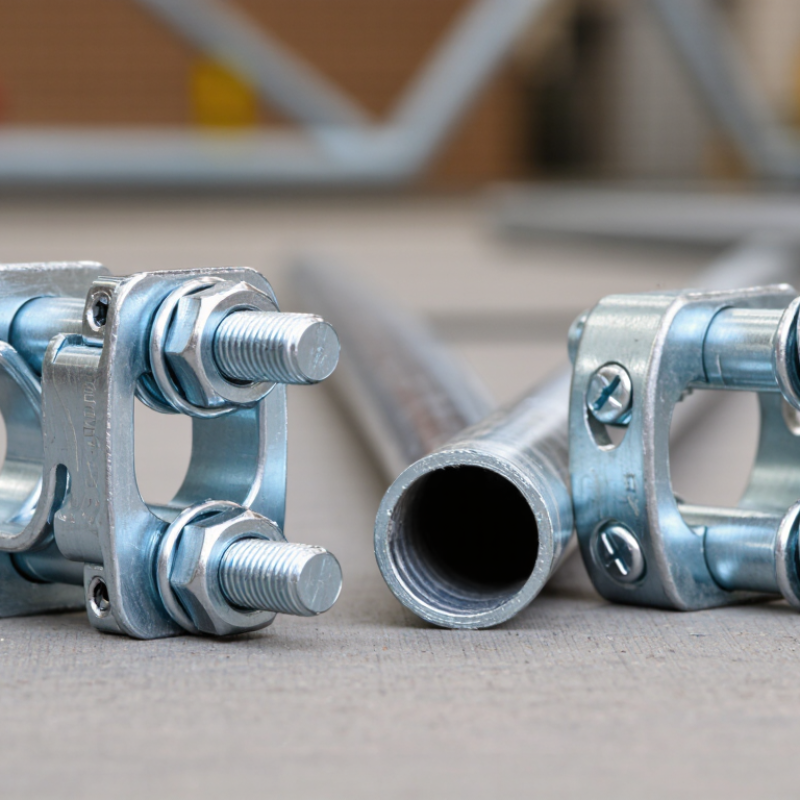
German vs American Rigid Scaffolding Clips How to Choose?

German and American Rigid Scaffolding Clips: Definitions and Basic Designs

German vs American Rigid Scaffolding Clips How to Choose?

German and American rigid scaffolding clips connect two scaffold tubes at a fixed angle. They are not swivel fittings. A rigid clip usually holds tubes at 90 degrees, creating firm frames, guardrails, and support grids. German designs often use a compact forged body, two clamping shells, and a captive bolt with a nut. Metric tube sizes are common, especially around 48.3 millimeters. American designs often use a heavier right-angle clamp with a similar bolt-and-nut system. Their tube sizes may follow inch-based measurements, such as 1.9 inches. The naming is not perfectly consistent. Supplier catalogs and regional standards can differ.

The basic design matters more than appearance. Check the actual tube outside diameter before ordering. A small mismatch can reduce contact pressure and cause movement. Forged bodies generally resist repeated loading better than thin, poorly formed parts. Galvanized surfaces help protect fittings in wet outdoor conditions, but coating quality still matters. Look for clean threads, even bolt seating, and no casting cracks. In my experience, installers sometimes choose by visual similarity alone. That shortcut can create problems. Load ratings should come from tested technical documents, not estimates.

Tips: Measure both tubes with calipers. Confirm the required angle. Match the fitting with the local scaffold system. Tighten bolts evenly, then inspect for tube deformation. Replace damaged hardware. When standards remain unclear, ask a qualified scaffold engineer to verify compatibility.

Key Differences in Materials, Structure, and Manufacturing Standards

German and American rigid scaffolding clips often look similar, but their details can differ considerably. German-made fittings commonly use metric dimensions, forged or precision-cast steel, and tightly controlled surface finishing. Many are designed around exact tube tolerances and consistent joint alignment. American fittings may use inch-based dimensions, malleable iron, forged steel, or pressed components, depending on the application. Material choice affects weight, impact resistance, corrosion behavior, and service life.

Structure deserves close inspection. A rigid clip with thick jaws, clean threads, and balanced load paths usually resists movement better than a lighter fitting. Some designs prioritize fast installation, while others favor maximum rigidity. Check the bolt diameter, nut engagement, hinge movement, and contact area around the tube. Fit matters. A small dimensional mismatch can create uneven pressure or local tube damage. Measure twice.

Manufacturing standards provide useful evidence, but they do not replace product verification. German products may reference DIN-based dimensions or testing practices, while American products may follow ASTM, ANSI, or job-specific requirements. These references should match the intended scaffold system and regional rules. Ask for material certificates, test reports, coating specifications, and traceability records. On site, I have seen reliable-looking clips fail basic fit checks because the actual tube size was overlooked. The national label can mislead. Manufacturing consistency, documented testing, and correct installation matter more than appearance. Even experienced buyers should review their assumptions.

German vs American Rigid Scaffolding Clips: How to Choose?

Key differences in materials, structure, and manufacturing standards

How to read this chart: The values show whether the referenced framework explicitly covers each topic, not a product-quality score. EN 74-1 provides a dedicated European coupler standard with defined performance and testing requirements. In the United States, OSHA 29 CFR 1926 Subpart L primarily sets scaffold safety and performance requirements, while product selection commonly relies on engineering documentation and applicable consensus standards.
Practical selection guidance: Check body material and corrosion protection, confirm whether the clip is fixed-angle or swivel, verify compatible tube diameter, and require documented load testing, traceability, and installation instructions. Do not treat the chart as a substitute for project engineering approval.
Reference frameworks: EN 74-1 for couplers, spigot pins and baseplates; OSHA 29 CFR 1926 Subpart L for U.S. scaffold requirements.

Load Capacity, Safety Requirements, and Compatibility Considerations

German vs American Rigid Scaffolding Clips: How to Choose?

Load capacity should guide every clip selection. Regional systems may use different tube diameters, wall thicknesses, and testing methods. A clip rated for one assembly may not perform safely on another. Check the manufacturer’s tested capacity, not only the material label. Static load is important, but vibration, impact, wind, and uneven loading also affect performance.

Safety requirements vary by project location and scaffolding design. Confirm the applicable local regulations before installation. A qualified scaffolding engineer should review critical joints, especially ledger connections and platform supports.

Inspect threads, bolts, welds, and contact surfaces for distortion or corrosion. Tightening too much can damage the tube. Too little torque can allow slipping.

Compatibility is often underestimated. Measure the actual tube diameter with calipers, then confirm the clip’s jaw range and connection angle. German and American components may look similar but use different dimensions or test assumptions. Do not mix systems without documented approval.

A practical site check is simple: place the clip on clean, dry tubing and verify full contact around the surface. Small gaps matter.

One common mistake is choosing by price alone. I have seen crews overlook wall thickness and load direction. That decision may pass a visual inspection but fail under movement. Keep installation records, torque information, inspection dates, and replacement details. Good documentation supports safer decisions when conditions change.

Installation Methods and Performance in Different Scaffolding Systems

German vs American Rigid Scaffolding Clips: How to Choose?

Installation methods change noticeably between German-style and American-style scaffolding systems. German rigid clips often require precise tube alignment and controlled bolt tightening. Their compact shape can create a clean joint around narrow working spaces. American-style clips may allow faster field installation, especially where workers use familiar wrench-based procedures. However, fitting speed does not prove better performance. Tube diameter, wall thickness, and joint geometry must match the system design.

On site, I check the contact area before tightening any clip. Dirt, damaged galvanizing, or a slightly oval tube can reduce grip. A reliable installation uses calibrated tools and follows the specified tightening sequence. After loading, inspectors should examine slipping marks, bolt movement, and local tube deformation. Different scaffolding systems also transfer force differently. A clip that performs well on a frame system may behave poorly on a tube-and-coupler layout. This assumption is easy to miss. It deserves a second check.

Tips: Compare tested load data, not appearance. Confirm compatibility with the tube size and connection angle. Mark tightened joints during inspection. Recheck heavily loaded platforms after the first shift. In my experience, crews sometimes over-tighten clips to compensate for poor alignment. That can damage the tube and weaken the connection. Manufacturer instructions and applicable site standards should guide the final choice.

How to Choose the Right Clip for Your Project Needs

German vs American Rigid Scaffolding Clips: How to Choose?

Choosing the right rigid scaffolding clip starts with your project, not its country of origin. German and American clips may use different dimensions, testing methods, or connection habits. Similar appearance does not guarantee compatibility. Check the tube diameter, wall thickness, clip geometry, and required load direction before ordering. Measure twice.

Fixed clips suit straight, permanent-looking connections, while swivel clips help create angled braces and irregular frames. Select steel or another approved material based on moisture, impact, and expected service conditions. Outdoor work may require stronger corrosion protection. Indoor work still needs clean, undamaged components. Small defects matter.

Ask for traceable test information and installation guidance from the supplier. Confirm that the clip fits your exact tube system, rather than relying on a general size label. A simple trial assembly can reveal poor seating, uneven contact, or difficult tightening. Do not force it. That can weaken the connection.

Inspect threads, bolts, jaws, and contact surfaces before use. Replace bent or cracked parts immediately. A practical mistake is choosing the strongest-looking clip without checking the actual load path. Strength alone is not enough. The connection must match the frame design and site conditions. Advice can sound certain, but measurements and competent inspection should have the final word.

German vs American Rigid Scaffolding Clips: How to Choose the Right Clip for Your Project Needs
Selection Dimension Typical German-Market Rigid Clip Typical American-Market Rigid Clip
Primary Function Connects two scaffold tubes at a fixed angle, most commonly 90°, for frames, ledgers, transoms, guardrails, and bracing. Connects two scaffold tubes at a fixed angle, most commonly 90°, for tube-and-clamp scaffold assemblies and related support structures.
Common Tube Diameter Usually designed for scaffold tubes with an outside diameter of 48.3 mm. Usually designed for scaffold tubes with an outside diameter of 1.90 in, equivalent to approximately 48.3 mm.
Typical Tube Wall Compatibility Often used with steel tubes around 3.2 mm wall thickness, but the approved range depends on the clip design and manufacturer specification. Commonly used with steel scaffold tubes around 0.095 in wall thickness, but compatibility must be confirmed from the product specification.
Angle Configuration Rigid right-angle clips are intended to maintain a fixed 90° connection. Swivel couplers are separate products and should not be substituted. Rigid right-angle clips are intended to maintain a fixed 90° connection. Swivel clamps are separate products for variable-angle bracing.
Connection Method Common designs use forged or pressed steel bodies with bolts, nuts, and washers tightened to the specified torque. Common designs use forged or pressed steel bodies with bolts, nuts, and washers tightened according to the product instructions.
Typical Material Steel is standard for load-bearing scaffold couplers; protective finishes may include hot-dip galvanizing or electroplating. Steel is standard for load-bearing scaffold clamps; protective finishes may include hot-dip galvanizing or zinc plating.
Relevant Standards to Check For many European projects, verify conformity with the applicable parts of EN 74-1 and the project’s national scaffold regulations. For many U.S. projects, verify compliance with applicable OSHA scaffold requirements, ANSI/ASSP A10.8, and the engineer’s project specifications.
Load Capacity Capacity is not universal. It depends on the coupler class, tube condition, bolt torque, installation direction, and certified test data. Capacity is not universal. It depends on the clamp design, tube condition, bolt torque, installation direction, and documented test data.
Best Choice for 90° Tube Connections Choose a certified fixed-angle coupler matched to 48.3 mm tubes and the required European approval documentation. Choose a listed or approved right-angle clamp matched to 1.90 in tubes and the project’s U.S. compliance requirements.
Best Choice for Diagonal Bracing Use a tested swivel coupler when the brace must connect at changing angles; do not force a rigid clip into an angled connection. Use a tested swivel clamp when the brace must connect at changing angles; do not use a right-angle clamp for an improperly aligned brace.
Interchangeability Often dimensionally compatible with 48.3 mm tube systems, but thread forms, jaw geometry, certifications, and rated performance still need verification. Often dimensionally compatible with 1.90 in tube systems, but thread forms, jaw geometry, certifications, and rated performance still need verification.
Inspection Requirements Reject clips with cracks, distortion, severe corrosion, damaged threads, missing hardware, or jaws that do not close evenly. Reject clips with cracks, distortion, severe corrosion, damaged threads, missing hardware, or jaws that do not close evenly.
Installation Priority Follow the approved erection method, use the specified torque, keep tubes fully seated, and prevent contact between incompatible tube sizes. Follow the approved erection method, use the specified torque, keep tubes fully seated, and prevent contact between incompatible tube sizes.
Cost Consideration Unit price is influenced by steel grade, manufacturing method, corrosion protection, certification, and order volume. Unit price is influenced by steel grade, manufacturing method, corrosion protection, certification, and order volume.
Recommended Buying Decision Best for projects governed by European specifications when the clip’s 48.3 mm fit, approval documents, test data, and torque requirements are clearly documented. Best for projects governed by U.S. specifications when the clip’s 1.90 in fit, approval documents, test data, and installation requirements are clearly documented.
Final Verification Confirm tube diameter, wall thickness, coupler type, load requirement, corrosion condition, applicable standard, and approval from the competent scaffold designer or engineer. Confirm tube diameter, wall thickness, clamp type, load requirement, corrosion condition, applicable standard, and approval from the competent scaffold designer or engineer.

FAQS

What material differences can affect rigid scaffolding clip performance?

Regional clips may use forged steel, precision-cast steel, malleable iron, or pressed components. Material affects weight, impact resistance, corrosion behavior, and service life. Appearance can fool buyers. Request material certificates before purchase.

Why do metric and inch-based dimensions matter?

Different systems may use metric or inch-based tube dimensions. A small mismatch can create uneven pressure or tube damage. Measure the actual tube with calipers. Fit comes first.

Which structural details should be checked before installation?

Examine jaw thickness, bolt diameter, thread condition, nut engagement, and hinge movement. Check whether the contact area fully surrounds the tube. Balanced load paths usually resist movement better. Small gaps matter.

How should the clip’s load capacity be evaluated?

Check the tested capacity for the complete intended assembly. Do not rely only on the material label or appearance. Consider static loads, vibration, impact, wind, and uneven loading. Real conditions can be rougher.

Can clips from different regional systems be mixed?

Do not mix components without documented approval. Confirm tube diameter, wall thickness, jaw range, connection angle, and testing assumptions. Place the clip on clean, dry tubing during a fit check. I still recheck assumptions.

What safety checks are important before tightening a clip?

Inspect bolts, threads, welds, contact surfaces, and hinges for distortion or corrosion. Excessive tightening can damage the tube. Insufficient tightening can cause slipping. Use the specified torque information.

Which standards and documents should buyers request?

Confirm the applicable local requirements for the scaffold design and project location. Request test reports, coating specifications, material certificates, and traceability records. Standards provide evidence, but product verification remains necessary. Paperwork is not everything.

Why is choosing the lowest price risky?

A cheaper clip may hide differences in wall thickness, material quality, or tested capacity. Crews can overlook load direction and actual tube size. Keep installation records, torque details, inspection dates, and replacement information. Price alone misleads.

Conclusion

Choosing between German and American rigid scaffolding clips requires more than comparing their appearance. These clips may differ in geometry, material grades, manufacturing tolerances, fastening methods, and the design standards commonly associated with each regional style. To understand how to distinguish between german and american style rigid scaffolding clips, inspect the clamp profile, bolt or pin arrangement, tube dimensions, connection angle, and identification markings. However, visual differences alone are not enough; verified technical data should always be reviewed.

Load capacity, safety factors, tube compatibility, and system requirements are equally important. A suitable clip must match the scaffold tube diameter and provide a secure connection under expected vertical, horizontal, and dynamic loads. Installation should follow the manufacturer’s instructions, including correct positioning, tightening, inspection, and maintenance. Consider the project’s scaffolding system, working environment, corrosion exposure, assembly frequency, and required certifications before making a decision. The best choice is the clip that combines reliable performance, dimensional compatibility, documented testing, and practical installation requirements.

Amelia

Amelia

Amelia is a seasoned marketing professional with a wealth of expertise in our company’s core offerings. With an unwavering passion for driving growth and innovation, she plays a pivotal role in shaping our marketing strategies and enhancing brand visibility. A key aspect of her responsibilities......