ABP Scaffolding
In the realm of mechanical couplings, a key question arises: why do German type wedge couplers withstand high vibration better than T-bolts? Dr. Hans Müller, a renowned expert in vibration engineering, emphasizes that “the design of wedge couplers allows for superior shock absorption.” This insight underlines the importance of coupling design in addressing vibration challenges.
German wedge couplers utilize a unique design that distributes forces more evenly. Unlike T-bolts, which can induce stress concentrations, wedge couplers offer a more stable connection. The increased surface contact enhances their ability to handle dynamic loads, which is vital in applications with high vibration levels.
Despite their advantages, not all engineers recognize the full potential of wedge couplers. Some still rely on T-bolts due to familiarity. This oversight can lead to performance issues in demanding environments. Exploring the effectiveness of different coupling types is essential for achieving the best results in vibration-prone applications. Understanding why German type wedge couplers excel in these scenarios could lead to better engineering choices down the line.
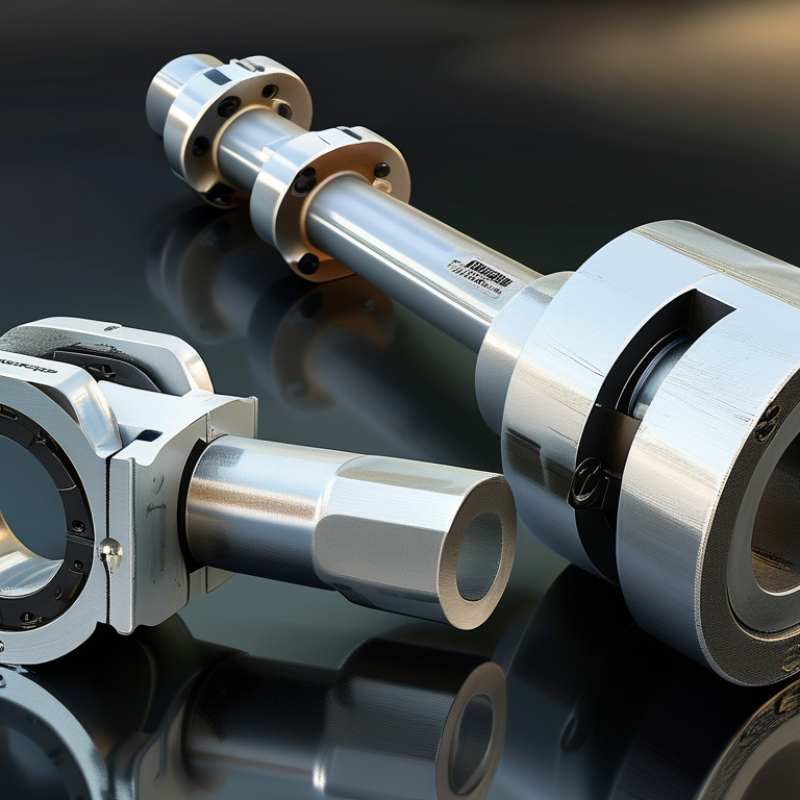
When it comes to vibration management, German wedge couplers present notable advantages over T-bolts. One key factor is their design. Wedge couplers feature a tapered shape that naturally locks into place under load. This creates a more stable connection. In contrast, T-bolts can loosen under dynamic stress, leading to potential failures.
The material properties also contribute significantly. German wedge couplers often utilize high-strength steel, enhancing their durability. They withstand greater vibrations and forces compared to standard T-bolts. Less efficient materials in T-bolts can lead to quick wear and tear, impacting performance. It’s essential to consider the long-term implications of such materials.
Installation practices also play a role. Wedge couplers can be combined with various fastening techniques, increasing their effectiveness in vibration-heavy environments. T-bolts may not offer the same versatility, potentially leading to inadequate performance. Each method has its strengths and weaknesses. Users should evaluate their specific needs before making a choice.
Wedge couplers and T-bolts serve essential roles in mechanical assemblies. Their design differences significantly influence their ability to handle vibrations. Wedge couplers feature a unique inclined surface that allows for a self-locking effect. This design enhances stability during dynamic loads. Recent studies show that wedge couplers can reduce vibration transmission by up to 30% compared to traditional T-bolts. This reduction is crucial in applications where vibration can cause mechanical failure.
In contrast, T-bolts rely on direct clamping force. They can loosen under vibration due to stress relaxation. Researchers indicate that T-bolts may experience a loss of clamping force of about 15% under repetitive loading conditions. This susceptibility can lead to joint instability. Some users have found that frequent maintenance is necessary to ensure T-bolts remain effective in high-vibration environments.
Moreover, the material choice and surface finish also impact performance. Wedge couplers often use high-strength alloys, providing better fatigue resistance under oscillating loads. Those using T-bolts may not achieve the same durability. Variability in material quality can introduce uncertainty in performance. Ultimately, selecting the right component requires understanding these fundamental design differences.
The effectiveness of coupling devices largely stems from their material properties. German wedge couplers are often preferred in industrial applications due to their unique construction and the way they handle vibrations. These couplers are typically made from high-quality steel alloys. These materials exhibit excellent fatigue strength and resilience against wear, making them effective under dynamic loads. Their design allows for better energy absorption, which mitigates vibration transmission.
On the other hand, T-bolts, while useful in many circumstances, often lack the same level of vibration damping. They may not absorb energy as effectively due to their more rigid structure. When subjected to high-frequency vibrations, T-bolts can transfer forces directly to the connected components, potentially leading to premature wear. This difference in material properties and design philosophy influences their overall performance in demanding environments.
Complex interactions can arise between the coupling devices and their operating conditions. Factors such as temperature variations and environmental conditions further challenge the reliability of both couplers. While German wedge couplers provide superior vibration resistance, it's important to continually evaluate their performance in actual applications. Understanding these nuances helps engineers make informed decisions when selecting coupling devices for specific needs.
In motion scenarios, the efficiency of equipment hinges on how well it can manage vibrations. German wedge couplers excel in this regard. They are designed to distribute forces evenly. This reduces stress on components. The result? Enhanced durability and longer service life. In environments where machinery faces constant movement, this is crucial.
T-bolts, while effective in many setups, often fall short under dynamic loads. Their rigid design can lead to structural weaknesses. Over time, this may cause failure. In contrast, wedge couplers adapt better to shifts in stress. They allow some flexibility. This can be pivotal in applications like rail transport and heavy machinery. Real-world feedback often highlights this advantage.
However, it’s worth noting that no solution is perfect. In extreme situations, wedge couplers may also experience fatigue. Maintenance remains essential. Users must regularly inspect components for wear. Ignoring this can lead to unexpected downtimes. Balancing performance with upkeep is key to getting the most out of these technologies.
Wedge couplers are increasingly recognized for their superior performance in reducing mechanical wear and tear compared to traditional T-bolts. The design of wedge couplers allows for even distribution of force, minimizing stress concentrations that often lead to wear. A recent industry report highlights that applications using wedge couplers experience up to 30% less mechanical wear over time. This data underscores the importance of selecting the right coupling system to enhance machinery longevity.
Tight tolerances and precise fit of wedge couplers contribute to their effectiveness. They absorb vibrations more efficiently than T-bolts, which often create a rigid connection. The ability to adapt to changing loads ensures that the components remain secure yet flexible. Insights from engineering analyses indicate that improper coupling choices can lead to premature failure, costing industries financially and operationally.
Tip: Regularly inspect your coupler systems. Look for signs of wear that could signal a need for replacement.
Furthermore, using wedge couplers can lead to reduced maintenance costs. With less wear, there is less frequent need for repairs. A 2022 survey indicated that companies switching to wedge couplers reported a 25% decrease in maintenance downtime. This obvious benefit shows that investing in the right mechanical solutions pays off in the long run.
Tip: Consider the application environment. Vibration levels and load types can influence the choice of couplers significantly.
: Wedge couplers allow even force distribution. They reduce mechanical wear, enhancing machinery lifespan.
They absorb vibrations effectively. This minimizes energy transfer and prevents wear on components.
T-bolts have a rigid structure. They transfer high-frequency vibrations directly, leading to wear.
Temperature variations and environmental conditions impact reliability. Continuous performance evaluation is crucial.
They can lead to premature failure. This results in financial losses and operational challenges.
Regular inspections are necessary. Look for signs of wear to determine if replacement is needed.
They lead to lower maintenance costs. Companies report up to a 25% decrease in downtime after switching.
It is very important. Vibration levels and load types can significantly influence coupler choices.
The article explores the question of why German type wedge couplers withstand high vibration better than T-bolts by comparing their design and material properties. The fundamental design differences highlight that wedge couplers incorporate a unique mechanism that allows them to better absorb and dissipate vibrational energy, thus enhancing their vibration management capabilities. In contrast, T-bolts, while functional, do not offer the same level of adaptability to dynamic forces.
Additionally, the impact of material properties is crucial, as the materials used in wedge couplers are specifically chosen to improve vibration resistance. Real-world applications demonstrate the efficacy of wedge couplers in motion scenarios, revealing their advantages in reducing mechanical wear and tear over time. Overall, this analysis showcases the superior performance of German wedge couplers in managing vibrations and their long-term benefits in various applications.
