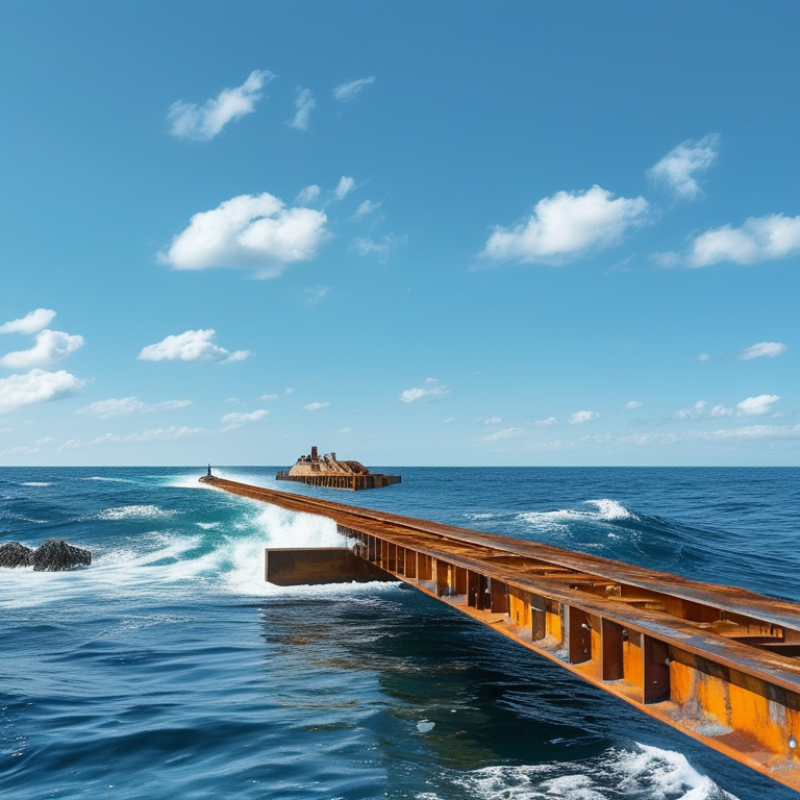
The use of hot-dip galvanized couplers in maritime environments raises important questions. Their durability and performance are critical for structural integrity. Many professionals wonder: what is the lifespan of a hot-dip galvanized coupler in maritime environments?
Saltwater exposure poses unique challenges. Corrosion can severely impact the performance of couplers. The chemical composition of seawater accelerates degradation. Factors like temperature, humidity, and marine organisms also play roles.
Understanding these elements is essential. Studies suggest varying lifespans based on environmental conditions. Some couplers may last up to 25 years, while others show signs of wear in just a few years. Evaluating these factors helps in making informed decisions and anticipating maintenance needs. Adequate knowledge fosters better solutions for long-term use in the sea.
Understanding Hot Dip Galvanization in Marine Environments
Hot dip galvanization is a widely recognized method for protecting steel in marine environments. This process involves coating steel with a layer of zinc, which provides excellent corrosion resistance. The harsh conditions at sea—like high humidity and saltwater exposure—can severely impact the lifespan of metal components. Galvanized couplers offer a reliable solution, but their longevity can vary depending on several factors.
In marine settings, the severity of exposure plays a crucial role. For example, direct contact with saltwater can accelerate corrosion. Environmental factors, such as temperature fluctuations and biological fouling, also affect lifespan. Couplers may last anywhere from 10 to 30 years. However, maintaining them regularly can help extend their usability.
Despite their benefits, there are challenges. Over time, zinc can wear away, especially in regions of high abrasion. Not all hot dip galvanization processes meet the same quality standards. It's essential to assess the coating thickness and uniformity. Understanding these nuances can make a significant difference in performance and reliability. Proper assessment ensures that hot dip galvanized couplers serve their purpose effectively in demanding marine environments.
Factors Affecting the Lifespan of Hot Dip Galvanized Couplers at Sea
Hot dip galvanized couplers are widely used in marine environments, mainly due to their corrosion resistance. However, several factors affect their lifespan at sea. Salinity levels, ambient temperatures, and water movement significantly influence how these couplers degrade. The harsh sea conditions can lead to accelerated wear and tear. Understanding these factors is essential for maximizing the longevity of these components.
Corrosive agents are abundant in marine environments. Saltwater poses a significant threat, leading to galvanic corrosion. Elevated temperatures can also shorten the lifespan of hot dip galvanized couplers. Variations in water flow can create conditions for uneven wear, increasing the risk of failure. Maintenance is fundamental. Regular inspections and timely repairs can prevent unexpected issues.
When using hot dip galvanized couplers, consider environmental impacts. Assess local salinity and temperature variations. Implement protective coatings when necessary to enhance durability. It’s vital to ensure the couplers function optimally in seawater applications. Don't overlook the importance of routine evaluations to provide insight into their condition. A proactive approach can save time and costs in the long run.
Corrosion Mechanisms Impacting Galvanized Steel in Seawater
When considering the lifespan of hot dip galvanized couplers at sea, it is critical to understand the corrosion mechanisms at play. Seawater is highly corrosive due to its high salt content and the presence of various ions that accelerate deterioration. Galvanized steel, coated with zinc, offers some protection, but this layer is not invincible.
Over time, the zinc coating may corrode, especially in areas with debris or biofilm accumulation. These localized environments create “crevice corrosion,” leading to rapid degradation. Factors like water temperature, salinity, and oxygen levels also play significant roles. For example, warmer water often increases corrosion rates.
It's also important to highlight that galvanized couplers exposed to continuous wet-dry cycles tend to suffer more. They may develop rusting beneath the zinc layer, compromising structural integrity. Understanding these elements is essential for maintenance strategies in marine environments. The variability means that while guidelines exist, actual lifespans can differ significantly.
Corrosion Resistance of Hot Dip Galvanized Couplers in Seawater
Maintenance Strategies to Extend the Lifespan of Couplers at Sea
Hot dip galvanized couplers are popular in marine environments due to their corrosion resistance. However, their lifespan can be significantly affected by factors such as seawater exposure, temperature fluctuations, and marine growth. To ensure these couplers last, maintenance strategies are essential.
Regular inspections play a crucial role. They help identify early signs of corrosion or wear. Check for any damage around connections. Cleaning the surface can remove marine growth, which often accelerates deterioration. Even a simple visual check can reveal issues. Don’t overlook the importance of thorough maintenance.
Another effective strategy involves applying protective coatings. These can provide an additional layer against harsh marine conditions. Consider using zinc-rich paints or specialized marine coatings. Reapplying these protective layers periodically can extend the coupler’s lifespan considerably.
Reflect on how often maintenance is performed. It’s easy to become complacent if everything seems fine. Regularly update maintenance schedules based on actual conditions rather than assumptions. This proactive approach can make a significant difference in performance and durability.
Case Studies: Lifespan of Hot Dip Galvanized Couplers in Marine Applications
The lifespan of hot dip galvanized couplers in marine applications is a topic of interest for engineers and builders. These couplers are essential for various projects, particularly in coastal and offshore environments. Their ability to resist corrosion significantly impacts their durability. However, factors such as seawater salinity and temperature variations can challenge their longevity.
Case studies show varying results. In some regions, couplers maintain structural integrity for over 25 years. Conversely, in harsher environments, corrosion can set in within a decade. Specific interventions, like applying protective coatings, can extend lifespan. Yet, the effectiveness of these measures often depends on local conditions and maintenance routines.
Real-world observations reveal inconsistencies. Some projects report unexpected corrosion, prompting further study into the quality of zinc coatings used. This aspect highlights the need for continuous improvement in manufacturing processes. Analyzing the performance of hot dip galvanized couplers helps avoid potential failures. Understanding environmental influences is crucial for enhancing the reliability of these components in marine settings.
FAQS
: Salinity levels, ambient temperatures, and water movement significantly influence their degradation.
Saltwater can lead to galvanic corrosion, which shortens their lifespan considerably.
Regular inspections help identify early signs of corrosion and wear, avoiding unexpected issues.
Clean surfaces regularly and apply protective coatings to shield against harsh conditions.
Maintenance schedules should be updated based on actual conditions, not just assumptions.
No, some couplers last over 25 years, while others show significant corrosion in a decade.
They provide an additional barrier against marine conditions, extending lifespan if reapplied as needed.
Evaluate local salinity, temperature variations, and maintenance routines to optimize function.
Yes, neglect can lead to unexpected failures, highlighting the need for diligence in care.
It assists in making informed decisions regarding materials and maintenance, improving overall performance.
Conclusion
Hot dip galvanization is a widely used method to protect steel couplers from corrosion in marine environments. However, the question arises: what is the lifespan of a hot-dip galvanized coupler in maritime environments? Various factors affect this lifespan, including the presence of seawater, temperature fluctuations, and exposure to pollutants. Understanding the corrosion mechanisms specific to galvanized steel in seawater, such as galvanic corrosion and pitting, is crucial for assessing durability.
To extend the lifespan of hot dip galvanized couplers at sea, effective maintenance strategies should be implemented. Regular inspections, cleaning, and protective coatings can significantly mitigate corrosion risks. Case studies provide valuable insights into real-world applications, demonstrating the practical longevity of these couplers under varying marine conditions. Ultimately, careful management and monitoring can enhance the performance and durability of hot dip galvanized couplers, ensuring their reliability in harsh maritime environments.
 ABP Scaffolding