 ABP Scaffolding
High winds expose weaknesses that ordinary weather can hide. Temporary structures may vibrate, twist, and transfer sudden loads through every connection. This raises an important question: why do british type swivel clamps perform better in high wind conditions? The answer involves more than a familiar product name. It depends on clamp geometry, steel quality, bolt engagement, surface contact, and installation accuracy. This guide explores the Top 10 Reasons British Clamps Perform Better in High Winds, using practical engineering principles and site-based observations.
A well-made swivel clamp can connect tubes at changing angles while maintaining firm contact around the tube surface. Its forged body, threaded fastener, and carefully matched dimensions help resist movement under repeated gusts. Small details matter. A clean thread grips more reliably. Correct tightening prevents slipping without crushing the tube. Galvanized surfaces also help protect the connection during wet, exposed work.
However, no clamp is windproof. That claim needs qualification. Poor tube condition, incorrect spacing, uneven tightening, or an unsuitable design can reduce performance quickly. Even a premium clamp may fail when the supporting structure is poorly braced. Wind loads also vary with height, shape, location, and exposure. Therefore, product selection should follow competent structural assessment and the manufacturer’s stated requirements. This discussion focuses on repeatable design advantages, not exaggerated promises. Some field assumptions deserve challenge, too. Better hardware cannot replace careful inspection, proper bracing, and disciplined installation.
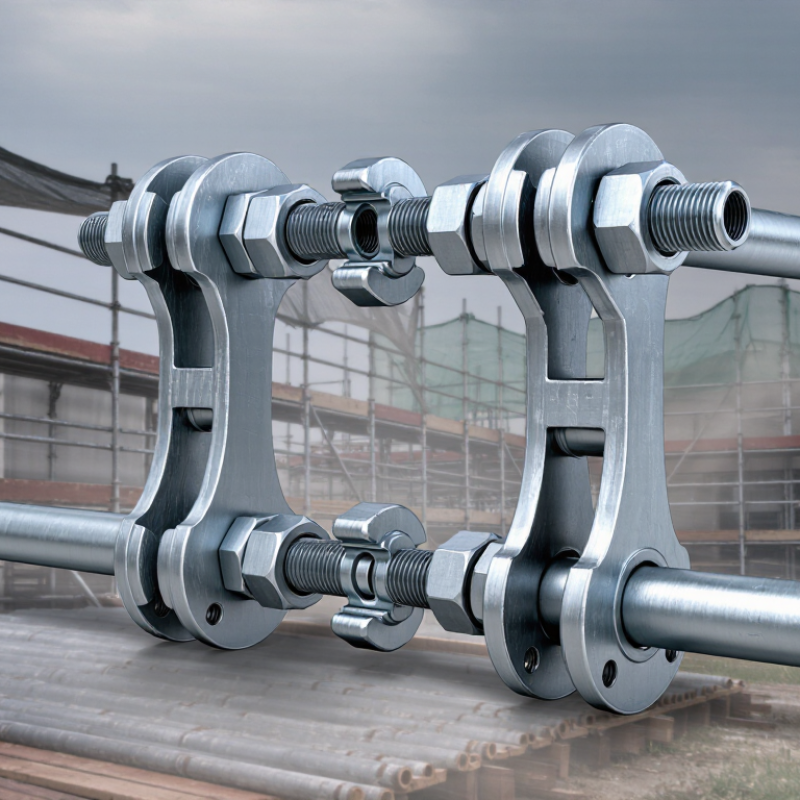
British clamps are mechanical fittings used to join tubes, pipes, rails, cables, and temporary frames. Their common applications include scaffolding, handrails, lighting supports, agricultural structures, and industrial pipework. Unlike welded joints, they can be adjusted, inspected, and replaced on site. That matters when a frame experiences vibration, thermal movement, or repeated gusts.
Performance depends on more than the clamp itself. BS EN 1991-1-4 and its UK National Annex assess wind actions using exposure, building height, terrain, and local wind speed. Correct clamp selection should follow that assessment. The Met Office’s State of the UK Climate 2023 reported 2023 as the UK’s second-warmest year on record, showing why changing weather conditions deserve practical attention. High-strength materials, accurate threads, wide contact areas, and controlled bolt tightening can reduce slipping. Small details matter.
Field experience shows that poorly aligned tubes can weaken a good connection. Dirt inside threads can also distort tightening. That is easy to overlook. Regular inspections should check corrosion, deformation, loose fasteners, and movement around loaded joints. Data from the UK Health and Safety Executive repeatedly highlights planning, competent installation, and inspection as essential controls for temporary structures. British clamps do not automatically outperform every alternative. Their advantage appears when certified components meet the design load, installation follows the manufacturer’s torque guidance, and the whole structure is engineered for its actual wind environment.
Broad contact faces spread wind forces across the tube. Angled jaws resist twisting, while deep engagement reduces pull-out risk.
Wind pressure rises with the square of wind speed. At 40 m/s, pressure reaches about 1.0 kPa. Small increases matter.
No. Thread quality, tightening accuracy, and surface contact remain important. One loose bolt can create movement during repeated gusts.
Height, terrain, exposure, turbulence, and nearby structures change wind effects. A sheltered roof differs greatly from an exposed coastal tower.
Use clean, undamaged tubes and confirm full clamp contact. Avoid trapped water, uneven surfaces, damaged coatings, and partially seated tubes.
Follow the specified tightening method and record the torque. Tightening by feel is unreliable. Excessive force may damage threads.
Inspect after assembly, severe weather, and structural changes. Check movement, corrosion, bolt condition, joint spacing, and edge distances.
No. Standards create a useful baseline, not a guarantee. Site conditions and installation quality still decide much of the outcome.
Use right-angle clamps for fixed geometry. Use swivel clamps when alignment needs movement. The wrong choice can increase instability.
Keep photographs, torque records, inspection notes, and batch information. Paperwork helps trace problems, but it cannot replace sound judgement.
British clamps are widely used in scaffolding, temporary structures, handrails, pipe supports, and other applications where secure connections are essential. Their strong performance in exposed environments comes from carefully engineered swivel designs, accurate load distribution, and the ability to connect components at different angles. This explains why do british type swivel clamps perform better in high wind conditions: they help create stable, adaptable joints that can resist movement and maintain structural alignment when wind forces change direction.
British standards also support reliable design, manufacturing, and testing requirements, helping improve consistency and safety. Durable materials, protective coatings, and effective corrosion resistance preserve clamp strength during prolonged outdoor use. However, even the best clamp depends on correct installation. Proper tightening, suitable component compatibility, accurate spacing, regular inspection, and secure anchoring all contribute to maximum stability. Together, thoughtful design, dependable materials, recognized standards, and professional installation allow British clamps to provide strong and reliable performance in high-wind conditions.
